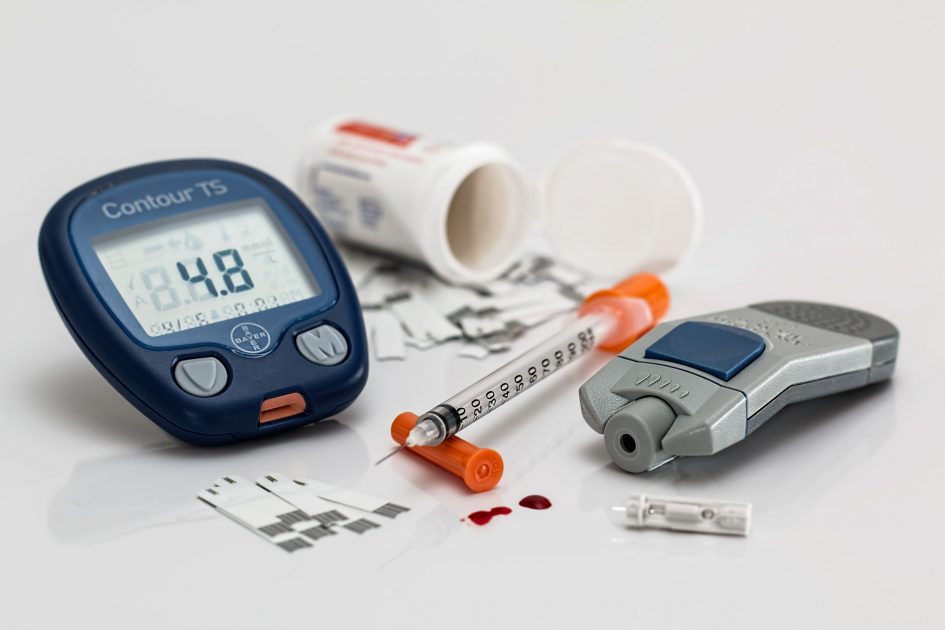
Diabetes is a chronic (long-lasting) health condition that affects how your body turns food into energy.
Most of the food you eat is broken down into sugar (also called glucose) and released into your bloodstream. When your blood sugar goes up, it signals your pancreas to release insulin. Insulin acts like a key to let the blood sugar into your body’s cells for use as energy.
If you have diabetes, your body either doesn’t make enough insulin or can’t use the insulin it makes as well as it should. When there isn’t enough insulin or cells stop responding to insulin, too much blood sugar stays in your bloodstream. Over time, that can cause serious health problems, such as heart disease, vision loss, and kidney disease.
There isn’t a cure yet for diabetes, but losing weight, eating healthy food, and being active can really help. Taking medicine as needed, getting diabetes self-management education and support, and keeping health care appointments can also reduce the impact of diabetes on your life.
Types of Diabetes
There are three main types of diabetes: type 1, type 2, and gestational diabetes (diabetes while pregnant).
Type 1 Diabetes
Type 1 diabetes is thought to be caused by an autoimmune reaction (the body attacks itself by mistake) that stops your body from making insulin. Approximately 5-10% of the people who have diabetes have type 1. Symptoms of type 1 diabetes often develop quickly. It’s usually diagnosed in children, teens, and young adults. If you have type 1 diabetes, you’ll need to take insulin every day to survive. Currently, no one knows how to prevent type 1 diabetes.
Type 2 Diabetes
With type 2 diabetes, your body doesn’t use insulin well and can’t keep blood sugar at normal levels. About 90-95% of people with diabetes have type 2. It develops over many years and is usually diagnosed in adults (but more and more in children, teens, and young adults). You may not notice any symptoms, so it’s important to get your blood sugar tested if you’re at risk. Type 2 diabetes can be prevented or delayed with healthy lifestyle changes, such as losing weight, eating healthy food, and being active.
Gestational Diabetes
Gestational diabetes develops in pregnant women who have never had diabetes. If you have gestational diabetes, your baby could be at higher risk for health problems. Gestational diabetes usually goes away after your baby is born but increases your risk for type 2 diabetes later in life. Your baby is more likely to have obesity as a child or teen, and more likely to develop type 2 diabetes later in life too.
Natural Remedies for Type 2 Diabetes
Type 2 diabetes (also called diabetes mellitus) results from the perfect storm of not enough movement, too much of the wrong foods, emotional stress, lack of sleep, toxins, and genetics. More often than not, patients with type 2 diabetes look towards natural medicine in addition to their conventional medicine for help in treating their disease. Natural medicines and using food as medicine is a wonderful way to complement your diabetes treatment. However, if added without the correct knowledge or guidance, mixing herbs, supplements and medicines can lead to a drop in blood sugar called hypoglycemia.
While I do not recommend starting any new treatments without consulting your health care provider, below find a list of my top natural remedies for type 2 diabetes.
- Fiber and Barley
Eating fiber decreases blood sugar and insulin concentrations. The recommended amount of fiber is around 30 grams per day. Most Americans get around 6-8 grams, which is not nearly enough. While you can take fiber supplements like Metamucil (psylium husk), the best way to reach your goal is to eat your veggies! Barley is a high-fiber, high-protein grain which has lots of data to support its role in helping improve blood sugar, insulin, cholesterol and general inflammation. Barley does not requiring soaking and usually can cook in less than 15 minutes on the stove top with just some water and salt.
- Chromium
Mainly found in brewer’s yeast, deficiency in chromium impairs the metabolism of glucose. Evidence supports chromium for lower blood sugar and A1c levels. Be careful if you have kidney disease with this supplement.
- Zinc
Those with diabetes are commonly found to be zinc deficient. Studies have shown zinc supplementation can reduce blood sugar and A1C, have an antioxidant effect, lower blood sugar and even help treat some of the complications related to diabetes. Large doses of zinc can inhibit the absorption of other minerals like copper, so be sure to ask for guidance of the appropriate dosing.
- Aloe Vera
The sap of aloe vera is known for its laxative effect. Therefore, make sure to get the juice of the gel! There is increasing evidence for use of the gel, which is the mucilaginous material inside the leaves. Be sure that any product you buy is free of aloin or anthraquinones to avoid finding yourself in the bathroom!
5.Berberine
This is one of my all-time favorite botanicals found in plants such as goldenseal, barberry, Oregon grape root and Coptis. Current evidence supports its use for decreasing blood sugar and hba1c. Be aware that this herb can interfere with metabolism of traditional pharmaceuticals and should never be taken while pregnant.
- Cinnamon
A medically beneficial indulgence to help lower your blood sugar and cholesterol levels.
Which foods lower blood sugar?
One way to control blood sugar is to eat a healthful diet. Generally, foods and drinks that the body absorbs slowly are best because they do not cause spikes and dips in blood sugar.
The glycemic index (GI) measures the effects of specific foods on blood sugar levels. People looking to control their levels should pick foods with low or medium GI scores.
A person can also pair foods with low and high GI scores to ensure that a meal is balanced.
Below are some of the best foods for people looking to maintain healthy blood sugar levels:
Whole wheat or pumpernickel bread
Many kinds of bread are high in carbohydrates and quickly raise blood sugar levels. As a result many breads should be avoided.
However, pumpernickel bread and 100 percent stone-ground whole wheat bread have low GI scores, at 55 or less on the GI scale.
Pumpernickel and stone-ground whole wheat breads have lower GI scores than regular whole wheat bread because the ingredients go through less processing.
Processing removes the fibrous outer shells of grains and cereals. Fiber slows digestion and helps to stabilize blood sugar levels.
- Most fruits
Except for pineapples and melons, most fruits have low GI scores of 55 or less.
This is because most fruits contain lots of water and fiber to balance out their naturally occurring sugar, which is called fructose.
However, as fruits ripen, their GI scores increase. Fruit juices also have very high GI scores because juicing removes the fibrous skins and seeds.
A large 2013 studyTrusted Source found that people who consumed whole fruits, especially blueberries, grapes, and apples, had significantly lower risks of developing type 2 diabetes.
- Sweet potatoes and yams
Regular potatoes have a high GI score, but sweet potatoes and yams have low scores and are very nutritious.
Some research indicates that the flesh of the sweet potato contains more fiber than the skin, indicating that the whole vegetable could be beneficial for those with diabetes.
Reporting the findings of an animal study, the researchers also noted that sweet potato consumption may lower some markers of diabetes.
While there is still no conclusive evidence that sweet potatoes can help to stabilize or lower blood sugar levels in humans, they are undoubtedly a healthful, nutritious food with a low GI score.
People can substitute sweet potatoes or yams for potatoes in a variety of dishes, from fries to casseroles.
- Oatmeal and oat bran
Oats contain B-glucans, which help maintain glycemic control.
Oats have a GI score of 55 or lower, making them less likely to cause spikes and dips in blood sugar levels.
Oats also contain B-glucans, which can do the following:
reduce glucose and insulin responses after meals
improve insulin sensitivity
help maintain glycemic control
reduce blood lipids (fats)
A 2015 reviewTrusted Source of 16 studies concluded that oats have a beneficial effect on glucose control and lipid profiles in people with type 2 diabetes. Determining the impact of oat consumption on type 1 diabetes requires more research.
Doctors still recommend that people with diabetes limit their consumption of oatmeal because 1 cup contains roughly 28 grams of carbohydrates.
- Most nuts
Nuts are very rich in dietary fiber and have GI scores of 55 or less.
Nuts also contain high levels of plant proteins, unsaturated fatty acids, and other nutrients, including:
antioxidant vitamins
phytochemicals, such as flavonoids
minerals, including magnesium and potassium
A 2014 systemic reviewTrusted Source concluded that eating nuts could benefit people with diabetes.
Can we now understand why God has given our first parents fruits as their meal? Do we have a call to turn back?

Dr Nsanzabera is a motivated health proffessional and an intense researcher on human life and natural remedies that can be used to treat multiple diseases.




June 22, 2021 at 12:40 pm
Thanks a bunch for sharing this with all of us you actually know what you are talking about! Bookmarked. Kindly also visit my website =). We could have a link exchange agreement between us!
June 25, 2021 at 12:04 pm
I think this is one of the most significant info for me. And i’m glad reading your article. But want to remark on some general things, The web site style is perfect, the articles is really excellent : D. Good job, cheers
June 26, 2021 at 4:34 am
Heya i抦 for the first time here. I found this board and I find It really useful & it helped me out a lot. I am hoping to provide something again and help others such as you helped me.
June 26, 2021 at 11:38 am
I think that a home foreclosure can have a important effect on the borrower’s life. Foreclosures can have a 7 to a decade negative effects on a borrower’s credit report. A new borrower who’s applied for home financing or any loans even, knows that your worse credit rating can be, the more tough it is to have a decent personal loan. In addition, it could possibly affect the borrower’s power to find a really good place to lease or rent, if that results in being the alternative property solution. Good blog post.
June 27, 2021 at 8:06 am
I simply wanted to say thanks once more. I am not sure what I would’ve taken care of without the creative concepts discussed by you regarding my question. It seemed to be a real terrifying circumstance for me, however , being able to view a expert way you resolved the issue made me to weep for gladness. Now i’m happy for the advice and as well , pray you realize what an amazing job you happen to be carrying out educating most people through the use of your webblog. Probably you have never encountered any of us.
June 28, 2021 at 11:34 am
One more thing. It’s my opinion that there are lots of travel insurance sites of reputable companies that allow you to enter your holiday details and get you the quotes. You can also purchase the international travel insurance policy on-line by using your credit card. Everything you should do is usually to enter all your travel specifics and you can start to see the plans side-by-side. Only find the plan that suits your allowance and needs and use your credit card to buy it. Travel insurance on the internet is a good way to begin looking for a dependable company for international holiday insurance. Thanks for revealing your ideas.
June 29, 2021 at 2:06 pm
Very good written story. It will be helpful to everyone who employess it, as well as myself. Keep doing what you are doing – can’r wait to read more posts.
June 30, 2021 at 1:40 pm
Aw, this was a very nice post. In concept I want to put in writing like this moreover ?taking time and precise effort to make an excellent article?however what can I say?I procrastinate alot and certainly not seem to get something done.
July 1, 2021 at 11:11 am
Hello, you used to write excellent, but the last several posts have been kinda boring?I miss your great writings. Past few posts are just a little out of track! come on!
July 2, 2021 at 12:51 pm
Hi, i think that i saw you visited my web site so i return the desire?I’m trying to in finding things to enhance my website!I assume its adequate to make use of a few of your concepts!!